
Engaging Citizens in Air Quality
Making air quality visible by turning citizen science data into an accessible experience that supports awareness, discussion, and participation.
Project Overview
Hollandse Luchten is a citizen science initiative by Waag Futurelab that enables residents in North Holland to measure air quality in their own neighbourhoods using sensors and open data. Using sensor technology and open data, citizens collect air quality measurements that are shared through an interactive map and discussed with experts and institutions.
The project aims to make air quality awareness more accessible and to encourage more people to take part in conversations and actions that improve the physical living environment.
Problem Statement
Air quality affects everyone’s health, but without broader public involvement, data remains underused, and conversations stay disconnected from everyday life.
The issue was not a lack of data or tools, but who the project reached and how approachable it felt. Older, technically confident users dominated participation. If left unsolved, air quality would remain a topic discussed by a few rather than a shared public issue supported by broader awareness, discussion, and participation.
Research Process
I focused on understanding who the project currently reached, who was missing, and why, and how air quality data was experienced by the public.
Identified participation gaps through stakeholder and client meetings, revealing who was currently involved and who was missing.
Uncovered clarity barriers through a usability assessment of the existing Hollandse Luchten and Waag platforms.
Understood how complex environmental data is communicated through competitor analysis of similar projects.
Generated and clustered ideas based on early research through brain dumping and the lotus blossom method.

View More
Key Insights
Complex language creates distance
Relevance drives engagement
Ownership leads to action
Physical touchpoints lower barriers
Design Process
Explored ways to make air quality easier to understand and engage with, while keeping the scientific data accurate and accessible.

View More
Directions Explored
Digital UX: Redesigning the website onboarding and proposing an app with air quality tips and a live map.
Marathon event: An interactive run where participants wear air sensors to measure air quality along the route.
Physical installation: A public vending machine that provides air-sensor kits to encourage easy participation.
Created a sitemap to organise the data into an intuitive user journey.
Designed a simple mascot and sketched running gear and supporter clothing to make the project more approachable.
Designed event items using recyclable materials, including reusable bottles, tote bags, and plantable seed-paper medals.
Constraints and Tensions
Solution
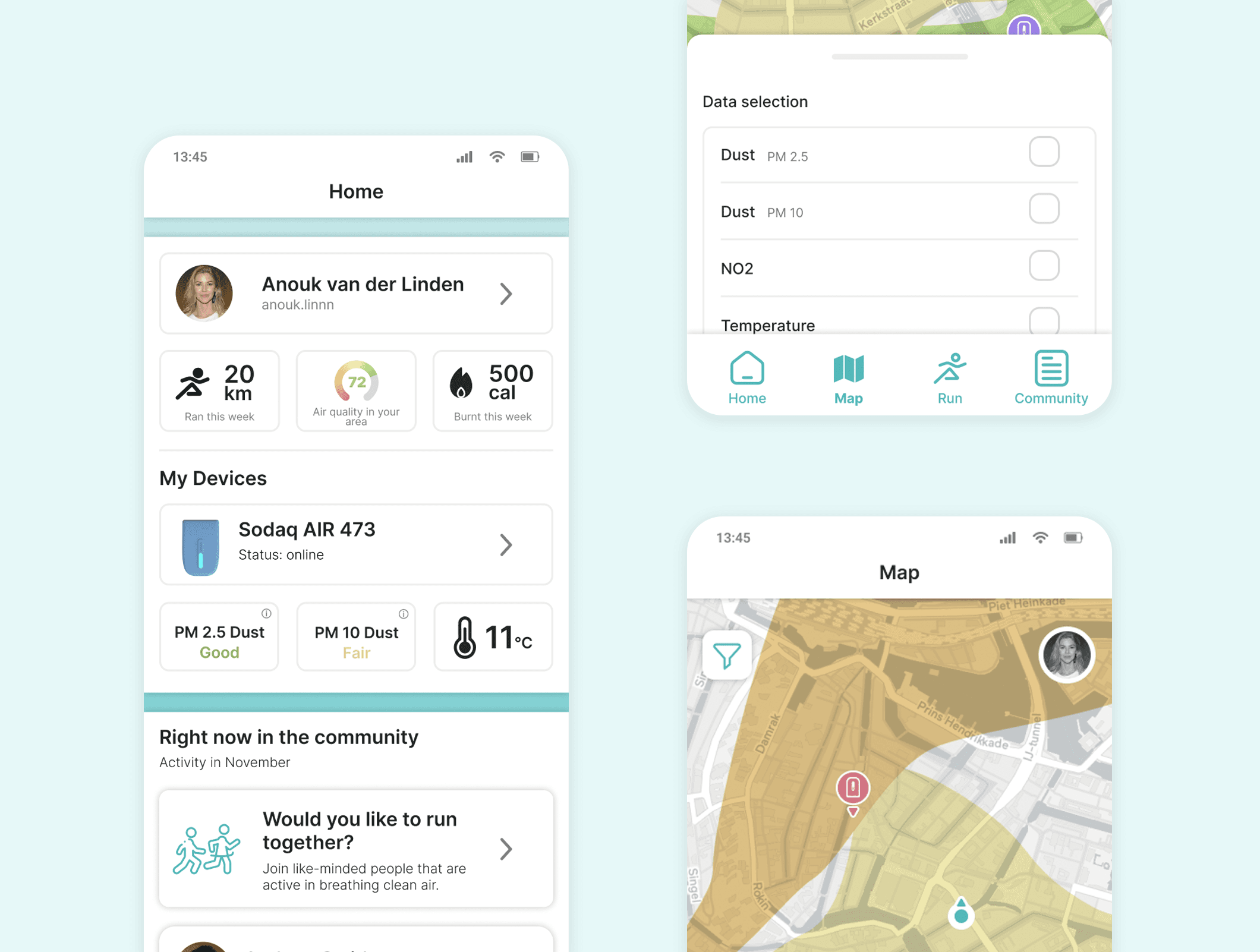
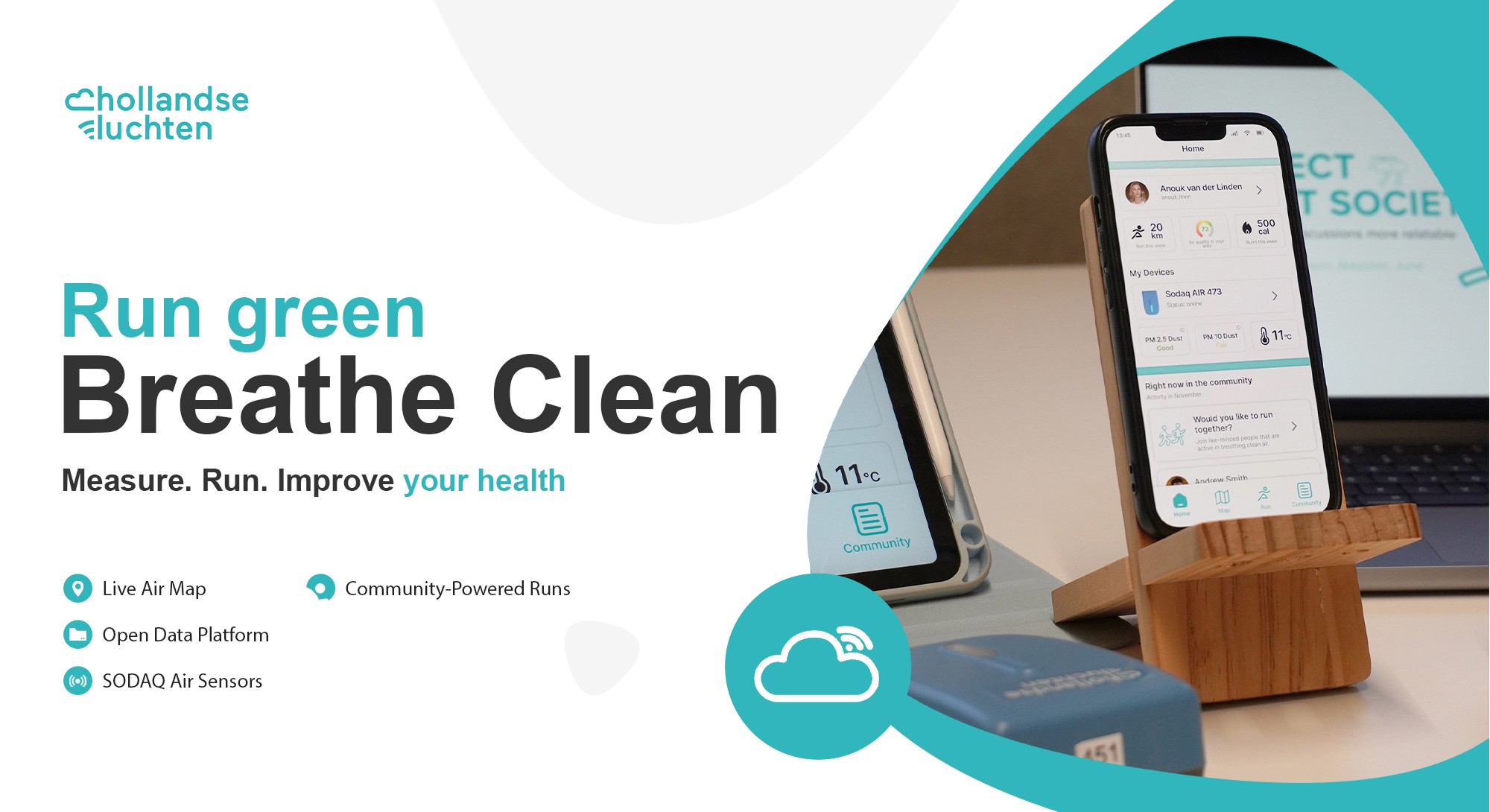
Turning air quality monitoring into an active, social experience through a community-run and a mobile app that connects environmental data with active, social, and health-benefiting lifestyle choices.
Run Tracking & Air Quality Map
A mobile app where users connect the SODAQ Air sensor to their phone and record air quality while running or walking. The map shows air quality using colour-coded data, helping users understand which areas are safer and where pollution is higher.
This connects everyday activity with environmental data and allows users to contribute their own measurements.
Community Feed & Marathon Registration
The app also includes a community section where users can read updates, tips, and articles about air quality. From this feed, they can explore upcoming runs, register for marathons, and see past events and collected data.
This structure makes it easier for people to follow the project and participate.
Community Runs & Sustainable Events
Community runs where people meet to run together in areas with good air quality or places where new data is needed. To support the environmental message, event items such as hoodies, bottles, and medals were designed using recyclable and sustainable materials.
These events connect awareness with action and encourage shared participation.

Impact
By connecting digital air-quality data with physical activity, the project turned an environmental issue into an accessible everyday experience, highlighting the strategic value of user-centered design.
Expanded audience focus to health-conscious users
Social connection via an in-app feed
Translated complex data into understanding, visual maps
Funding for sustainable merchandise for the final expo
High user satisfaction during high-fidelity testing
The client was highly enthusiastic, noting that successfully relating Hollandse Luchten to health and targeting health-conscious people was a brilliant way to expand their demographic